Bike, Kayak and Cargo Carriers Complete Guide: Hitch Racks, Roof Racks and Boxes
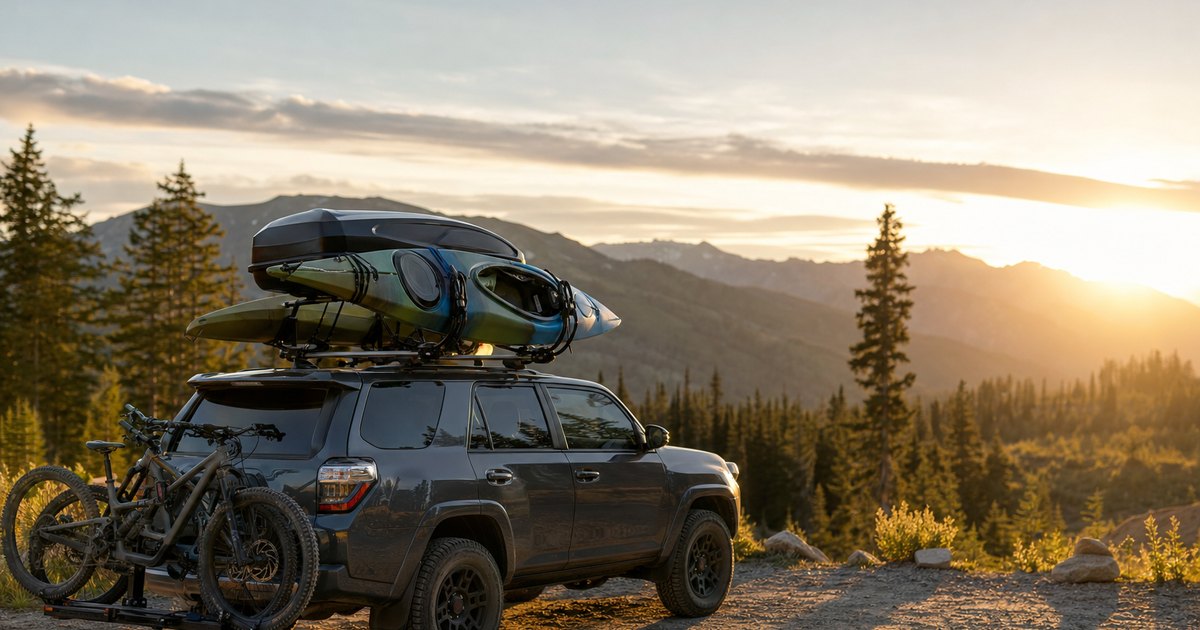
Quick answer: Bike, kayak and cargo carriers complete guide: hitch racks, roof racks and boxes
Choosing the right carrier comes down to matching carrier type to your vehicle and your gear. Hitch-mounted racks generally suit heavier e-bikes and offer bumper-height loading. Roof racks keep the hitch free for towing and work well for kayaks or an enclosed cargo box. Cargo boxes add weatherproof, lockable storage for road trips. The right pick depends on your vehicle's hitch class or crossbar rating, the weight you're hauling, and how often you load and unload.
- Vehicle type: factory hitch receiver, roof crossbars, or neither installed
- Combined weight of bikes, kayaks or gear versus the carrier's stated capacity
- Loading height and whether a ramp or tilt feature would help
- Folded or stored size if garage or driveway space is tight
- How many bikes, kayaks or bins need to travel at once
- Whether you still need tailgate, trunk or rear-door access while loaded
Key takeaways
- Hitch racks are rated by receiver class (commonly Class I through Class IV), and the class affects how much total weight the rack and its load can handle.
- Roof racks rely on crossbars rated for a specific static or dynamic weight, and that rating is separate from the vehicle manufacturer's roof load limit.
- Cargo boxes mount to existing crossbars and can affect fuel economy and wind noise at highway speed because of their profile.
- Kayak carriers come in styles such as J-cradles, saddles and stacker bars, and each style suits a different number or shape of boats.
- Electric bikes typically weigh more than standard bicycles, which makes hitch rack weight capacity and loading features more important for e-bike owners than for traditional cyclists.
Definitions
Hitch receiver class
A hitch receiver is the square tube bolted to a vehicle's frame that accepts a rack or other accessory. Receivers are grouped into classes, and the class generally indicates how much weight the receiver and an attached rack are built to support.
Crossbars
Crossbars are the bars that run side to side across a vehicle's roof, either factory-installed or added aftermarket, and they provide the mounting points for roof racks, kayak carriers and cargo boxes.
Payload capacity versus tongue weight
Payload capacity is the total weight a carrier is designed to hold, while tongue weight (for hitch-mounted products) is the downward force the loaded rack places on the hitch itself. Both figures matter and are usually listed separately by the manufacturer.
Core concepts
Hitch racks versus roof racks
Hitch racks mount behind the vehicle and generally make loading easier because bikes or gear sit closer to ground level. They also leave the roof clear, which matters if ceiling clearance in a garage is limited. Roof racks keep the hitch open for towing a trailer and can carry kayaks, cargo boxes or bikes at the same time if crossbar capacity allows. The trade-off is lifting gear overhead, which becomes more noticeable with heavier loads like e-bikes.
Kayak carrier styles
J-cradles hold a single kayak on its side and are a common choice for one or two boats. Saddle-style carriers support the kayak in a more level position and are often used for longer touring kayaks. Stacker bars let multiple kayaks lean against a central post, which can fit more boats on one set of crossbars but may require more careful strapping.
Why e-bike weight changes the equation
Because electric bikes add a motor and battery, they can weigh considerably more than a standard bicycle, and that extra weight pushes some hitch racks close to or past their stated capacity when carrying two bikes. This is why many riders look specifically at racks marketed for e-bikes, with features like reinforced arms or a loading ramp. Reviewing a dedicated e-bike hitch rack lineup is a reasonable starting point if your bikes are on the heavier side.
How cargo boxes fit into the picture
Cargo boxes are a separate category from bike and kayak carriers, built for enclosed, lockable storage of soft gear, luggage or camping equipment. They mount to the same crossbars used for other roof accessories, so a vehicle with one roof rack system can often switch between a box, a kayak carrier or bike trays depending on the trip, as long as nothing exceeds the rated roof load.
Decision framework
Use this sequence to narrow down a carrier type before comparing specific models.
- Confirm what your vehicle already has: a hitch receiver, factory crossbars, or neither. This alone rules out entire categories.
- Add up the likely weight of what you'll carry, including bikes, kayaks, coolers or bins, and compare it against the general capacity range for each carrier type.
- Decide whether you need to keep the hitch free for towing. If so, lean toward roof-based solutions.
- Check loading height and your own ability to lift gear overhead; this often tips the decision toward a hitch rack for heavier e-bikes.
- Think about storage between trips. A foldable hitch rack or removable crossbars can matter in a tight garage.
- Shortlist two or three specific products and verify current specifications, weight ratings and fit on the retailer page.
| Carrier type | Best suited for | Main trade-off |
|---|---|---|
| Hitch bike rack | Heavier bikes, frequent loading/unloading | Occupies the hitch receiver, may need a hitch lock |
| Roof bike rack | Vehicles that also tow, or need the hitch clear | Overhead lifting, garage clearance |
| Kayak carrier | One or more kayaks, less frequent bike use | Lifting weight overhead, strapping technique |
| Cargo box | Road trips needing enclosed, weatherproof storage | Reduced fuel economy, added wind noise |
Real-world scenarios
Small SUV owner hauling two e-bikes
A driver with a Class II or higher hitch receiver and two electric bikes will usually prioritize a hitch rack built for added weight, with a ramp to avoid lifting each bike into place. A design like the 2-Bike Hitch E-Bike Rack with Ramp, Foldable is built to fold down for storage when not in use, which matters if garage space is limited. A driver who also needs regular tailgate access might instead look at a rack with a tilt feature, such as the 2-Bike Hitch E-Bike Rack with Ramp, Easy Fold and Tilt, which is designed to tilt away from the vehicle without removing the bikes.
Family road trip with kayaks and camping gear
A family combining two kayaks with coolers, tents and duffel bags typically needs both a roof-mounted kayak carrier and either a cargo box or a separate hitch-mounted cargo carrier for overflow gear. Reviewing options built specifically for road trips, such as the guidance in this hitch cargo carrier guide, can help separate enclosed boxes from open baskets and decide which suits the trip's gear mix.
Sedan driver without a factory hitch
Someone with a compact sedan and no existing hitch receiver has two paths: install an aftermarket hitch and choose a compact hitch rack, or rely on roof crossbars if the vehicle supports them. This decision often comes down to vehicle-specific fitment, which is covered in more detail in a guide on electric bike hitch racks for small cars.
Common mistakes
- Ignoring tongue weight on top of total bike weight: a loaded rack can exceed the hitch's rated tongue weight even if each bike seems light. Check both figures, not just the rack's advertised capacity.
- Assuming roof rack capacity equals the vehicle's roof load limit: these are typically two different numbers. Confirm both before loading a kayak carrier or cargo box.
- Buying a rack sized for standard bikes when riding e-bikes: this can leave little margin for error. Look specifically at products designed around e-bike weight.
- Skipping a measurement of folded dimensions: a rack that fits the hitch may still be too wide or tall for a garage door or storage spot when folded.
- Overlooking ground clearance with a loaded hitch rack: steep driveways or speed bumps can cause contact. Check the rack's rated clearance before committing.
- Mixing carrier types without checking combined weight: adding a cargo box and a kayak carrier to the same crossbars can add up quickly. Add the weights together, not separately.
- Forgetting a hitch lock or cable lock: an unsecured rack or bike is an avoidable risk, especially at overnight stops during longer trips. See general transport guidance in this guide to transporting e-bikes on small vehicles for related setup considerations.
Limitations and checks
Hitch class, roof load ratings, folded dimensions, weight capacity, included hardware and app or lighting features can all change between model years and trims, so confirm these details on the current retailer listing before buying. This guide describes general categories and trade-offs rather than a hands-on comparison, and no testing of these products took place. Vehicle-specific fitment, including hitch receiver size and roof rack compatibility, should be verified against your exact make, model and year, since published specifications can vary by trim. Delivery timelines, return policies and warranty terms are set by the retailer and are not covered here.
Also on Amazon
Handy extras our readers pick up on Amazon. Compare reviews and delivery times before you buy.
- Kayak Roof Foam BlocksCarry a kayak without a full rack.Check price on Amazon
- Rooftop Cargo BagWaterproof bag for extra luggage.Check price on Amazon
- Hitch Light BarExtra visibility for hitch loads.Check price on Amazon
- Ratchet StrapsSecure loads on racks and trailers.Check price on Amazon
Search Amazon for more options and compare reviews and delivery times.
As an Amazon Associate I earn from qualifying purchases.
Bottom line
There is no single best carrier for every driver; the right choice depends on your vehicle's hitch or crossbar setup, what you're hauling, and how much lifting you're willing to do. Heavier e-bikes generally point toward a hitch rack with a ramp or tilt feature. Kayaks and road-trip gear often point toward roof-based solutions or a dedicated cargo carrier. Start with the decision framework above, shortlist a type, then verify current specifications on the retailer page before purchasing.
Frequently asked questions
Can a hitch rack and a roof rack be used at the same time?
Yes, a hitch rack and roof rack can generally be used together since they mount to different parts of the vehicle, as long as the hitch receiver and roof crossbars are each rated for their own loads. Check that nothing overlaps in weight capacity between the two systems, and confirm clearance so a loaded roof item does not interfere with rear visibility or a tilted hitch rack.
Do e-bikes need a different rack than regular bikes?
Not always, but it is worth checking the weight rating. Standard bike racks may be rated below the typical weight of an electric bike, so a rack marketed for e-bikes, often with reinforced arms or a loading ramp, reduces the chance of exceeding capacity when carrying one or two electric bikes.
What hitch class do I need for an e-bike rack?
The needed class depends on the rack's weight and the combined weight of the bikes it will carry; many e-bike-rated racks specify a minimum receiver class on their listing. Confirm your vehicle's installed hitch class and compare it against the rack manufacturer's stated requirement before purchasing.
Are cargo boxes compatible with any roof rack?
Cargo boxes typically require crossbars with a compatible shape and a minimum spread, so compatibility depends on your specific crossbar system rather than the vehicle alone. Review the box manufacturer's fitment information and your crossbar specifications together before assuming a match.
How many kayaks can a roof rack carry?
This depends on the carrier style and the roof's total load rating rather than a fixed number. J-cradles and saddles are commonly used for one or two kayaks, while stacker bars can sometimes hold more, provided the combined weight stays within both the carrier's and the vehicle's limits.
Is a foldable hitch rack worth it for small garages?
A foldable design can be worth considering if garage clearance or driveway space is tight, since it reduces the rack's footprint when not in use. Check the manufacturer's folded dimensions against your available space rather than assuming any foldable rack will fit.
Does a loaded hitch rack affect fuel economy?
A loaded hitch rack can increase drag, and a rooftop cargo box or kayak carrier typically has a larger effect due to its position and profile. The exact impact varies by vehicle, speed and load, so results will differ from one setup to another.
What should I check before buying a rack for a tilt or swing-away feature?
Confirm the feature actually operates with the vehicle's tailgate or trunk fully open, since clearance varies by vehicle body style. Also check whether the tilt or swing-away mechanism works with bikes still loaded, which is the main convenience these features are designed to offer.
Sources and further reading
Independent references on topics covered in this guide. We are not affiliated with these organizations.